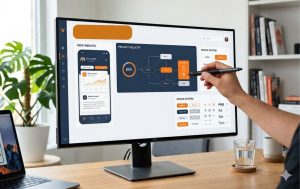

Marketing teams today are under more pressure than ever. Channels are fragmented, data pours in from every direction, and stakeholders operate in silos—creative, MarTech, analytics, and IT each pulling in their own direction.
The result? Campaigns that feel disjointed, prospects who drop off despite high engagement signals, and dashboards full of metrics that still fail to move the needle on revenue. Teams know what is happening, but they struggle to understand why—or how to turn insight into a seamless experience that builds trust and drives decisions in tight buying windows.
This is where a skilled Experience Designer steps in. Far more than a wireframer or UI specialist, the role is about leading end-to-end digital experiences that align user needs with business goals.
By combining deep user research, cross-channel journey mapping, and rigorous testing, Experience Designers cut through the noise, eliminate friction, and create connected journeys that feel intentional rather than accidental.
The Outcome → Higher conversion, stronger brand perception, and measurable business impact
even for resource-constrained teams serving busy, high-stakes audiences.
A strong Experience Designer starts by listening and aligning across marketing, MarTech, analytics, and IT. They audit and clean the data first—so every decision rests on solid ground.

The first move isn’t tactics; it’s meeting with stakeholders across marketing, MarTech, analytics, and IT to surface what’s working and what constraints exist. This approach prevents building in isolation, using CRM analysis and customer interviews to turn siloed knowledge into collective clarity.
Decision-makers (like physician-owners or office managers) don’t buy on features alone. They are driven by core needs like reclaiming time and financial stability, but held back by anxieties over implementation disruption. A designer translates these into actionable personas where pathos, ethos, and logos become the north star.
A designer pinpoints high-intent signals: attributable visits, repeated engagement, or webinar registrations. Once that radar pings, a tightly orchestrated 30-to-60-day journey activates across all channels. Every touchpoint is sequenced by real behavior—moving from scattered tactics to a hybrid model of timed drips and real-time triggers.
By mapping expectation versus current reality (Speed, Clarity, Communication, and Reliability), the Designer creates a blueprint for creative and content teams. Messaging evolves by stage, and content is sequenced to deliver proof exactly when anxiety peaks.
Conversion rates miss the bigger picture. Designers introduce nuanced metrics, such as a 1–10 confidence question: "How confident are you that switching would be smooth and low-risk?" This data informs rapid iteration and proves the impact on revenue.
Here’s how Experience Designers deliver results for marketing organizations overwhelmed by silos and data overload.
The first move isn’t to jump into tactics. It’s meeting stakeholders across marketing, MarTech, analytics, and IT to surface what’s working and what past campaigns have already taught the team. This prevents the trap of building in isolation. By validating strategy through CRM analysis and customer interviews, the Designer turns siloed knowledge into collective clarity.
Busy decision-makers don’t buy on features; they are driven by core needs like reclaiming time and financial stability. They are held back by anxieties over implementation disruption and implementation risk. A Designer translates these into Pathos, Ethos, and Logos. Suddenly, messaging stops being generic and starts speaking directly to what keeps prospects up at night.
Experience Designers pinpoint high-intent "radar" signals. Once that radar pings, a tightly orchestrated 30-to-60-day journey activates. Whether it's a webinar viewer receiving a case study or a pricing-page visitor seeing a retargeting ROI video, every channel works in concert. The team moves from scattered campaigns to real-time, action-triggered messaging.
Prospects expect speed and clarity; too often they encounter delays and fragmented follow-ups. By mapping expectation versus reality, the Designer creates a blueprint for content and creative teams. CTAs are prioritized for the moment, and content is sequenced to deliver proof exactly when anxiety peaks. Silos dissolve because everyone works from one map.
Leading Designers introduce nuanced metrics like the "Confidence Score." By asking how confident a prospect feels that a switch would be low-risk, teams learn where friction hides. The result isn’t just better campaigns; it’s a repeatable optimization framework that proves design's direct impact on revenue.
"A strong Experience Designer doesn’t replace existing functions; they amplify them. They transform 'data fog' into clear direction and silos into predictable revenue engines."

A Looney Tunes-Inspired Transformation
Imagine a small professional services firm owner—let’s call him Wile E. Coyote—who desperately needs a better way to “catch” efficiency, billable hours, and predictable cash flow. His current tools feel like ordering endless gadgets from the ACME Corporation: elaborate, expensive, and comically ineffective.
Every attempt to streamline operations ends in frustration, disruption, and yet another explosion of wasted time and thin margins. His tiny team is stretched thin, anxious about implementation risks, and skeptical of yet another “solution” that promises the world but delivers chaos.
A Director of Experience Design inherited a platform where qualified opportunities stalled at just 11%. Data was noisy, and prospects dropped off just as the "perfect plan" was about to be executed. The mission? Move from chaotic chases to the Road Runner way: fast, confident, and one step ahead.
The designer started by facilitating cross-functional workshops with marketing, MarTech, analytics, and IT. They uncovered what was working, past campaign lessons, and critical constraints. Most importantly, they led a rapid data audit and cleanup: standardizing UTM parameters, deduplicating CRM records, and fixing attribution gaps. Without clean data, every journey would have been built on sand.
With trustworthy data in hand, the team built vivid personas for the busy firm owner and operations lead. These weren't just demographics; they were maps of human emotion.
Clear high-intent "radar signals" were established: repeated sessions within seven days, webinar registrations, or pricing page dwell time. A gap analysis exposed the mismatch between the buyer's need for speed/clarity and the reality of delayed follow-ups and conflicting messages. These gaps became the blueprint for change.
The designer created a hybrid journey map (timed drips + real-time triggers) that was mobile-first. No more random tactics. Every touchpoint felt intentional:
Metrics went beyond clicks. A simple 1–10 confidence question was tracked: "How confident are you that switching would be smooth and low-risk?" This data informed continuous A/B testing and eliminated rework by giving creative teams a reliable map to build from.
By prioritizing clean data and deep insight, CoyoteCatch transformed "coyote chases" into predictable growth.
Success like CoyoteCatch isn't accidental—it's the result of identifying and closing specific journey gaps. Use the diagnostic tool below to see if Experience Design is the missing link in your revenue engine.
Take the 10-Sign Diagnostic Quiz ↓Select the boxes that apply to your current team environment to calculate your priority score.
Marketing excellence isn't about having the most tools or the most data, it's about how those pieces connect to form a trustworthy human experience. Whether you’re battling siloed departments or fragmented campaigns, the right Experience Design strategy transforms technical noise into a predictable revenue engine. You’ve seen the signs; now it’s time to take the lead.
Let’s bridge the gap between your strategy and your results.
Request a Free Consultation from YellowHammer IT, LLC →Your connected experience starts here.
An Experience Designer acts as the strategic bridge between user needs and business goals. They align stakeholders, clean up messy data, build shared personas, and map connected cross-channel journeys. The result is reduced silos, clearer direction for creative teams, and measurable growth in qualified opportunities.
They start by establishing clean data foundations—standardizing tracking and fixing attribution—to create a single source of truth. From there, they uncover journey gaps and define high-intent "radar" signals, replacing guesswork with a shared journey map that everyone can execute against.
It is an orchestrated 30–60 day experience where every channel works together based on real user behavior. For example, a pricing page view triggers a retargeting ad with an ROI calculator. The goal is to reduce perceived risk and guide busy decision-makers confidently toward a purchase.
Clean data is the foundation. Without it, high-intent signals are unreliable and personalization fails. Designers begin with a rapid data audit (UTM standardization, CRM deduplication) so every decision rests on solid ground instead of fog.
We track confidence indicators. By asking a simple 1–10 question about switching risk at key moments, we can see if the experience is actually building trust—leading to shorter sales cycles and higher-quality leads.
Typical outcomes include significant increases in qualified opportunities (up to 42% in some SaaS models), higher buyer confidence scores, and shortened sales cycles, all while reducing cross-team rework.
Any team feeling overwhelmed by fragmented campaigns or leads that lack confidence. It is especially critical for B2B or healthcare organizations serving busy, high-stakes decision-makers who need speed and clarity.
Still have questions about your specific marketing stack?
Contact YellowHammer IT, LLC for a no-obligation consultation →